

The curious case of Kyle Tucker’s quiet free agency
Some reasons why there are so few rumors and reports about this offseason's top available player

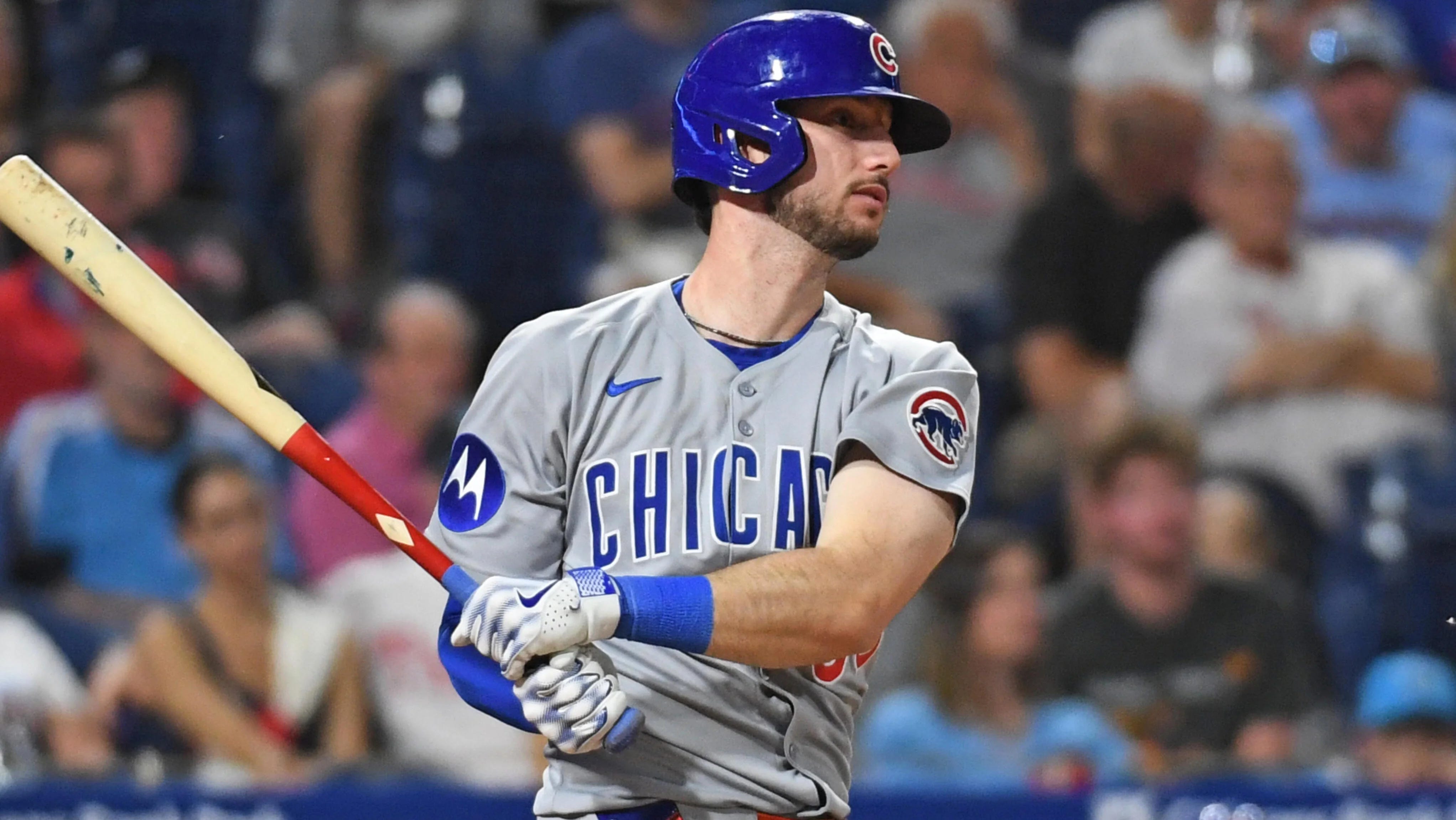
The Major League Baseball offseason is not known for moving at the quickest pace. There is usually some activity around the Winter Meetings in mid-December, but top free agents are regularly still signing well into Spring Training in March.
This year is no different. Kyle Schwarber, Pete Alonso, Dylan Cease, Josh Naylor, Edwin Diaz and Michael King, along with a number of other free agents have signed deals. But some of the biggest names have yet to move. Ketel Marte remains on the Arizona Diamondbacks, Edward Cabrera remains on the Miami Marlins and Freddy Peralta remains on the Milwaukee Brewers. Eugenio Suarez, Framber Valdez, Ranger Suarez, Cody Bellinger, Bo Bichette and Alex Bregman all remain unsigned.
Another player who has yet to sign, and who has had shockingly few rumors and reports come out about potential destinations, is Kyle Tucker.,
Following multiple reports linking Bregman to the Diamondbacks earlier this offseason, ESPN’s Buster Olney recently reported that the Boston Red Sox made an “aggressive offer” to try and retain their All-Star third baseman. There has been reporting all offseason about Bichette’s willingness to move off of shortstop, along with him being linked to almost every major market team looking for an infield bat. But not much has been written about Tucker beyond an occasional line in a column from the New York Post’s Jon Heyman saying a team has “checked in” on him.
Heading into the offseason, Tucker was, and still is by all accounts, the top free agent. MLB Trade Rumors projected he would get an 11-year, $400 million contract. The Athletic’s Tim Britton projected a 12-year, $460 million contract. ESPN’s Kiley McDaniel projected an 11-year, $418 million contract. These are all about $200 million more than all of the experts’ next projected largest contract and Cease’s eight-year, $210 million contract, the largest dolled out so far this offseason.
Tucker is one of the absolute best players in baseball when healthy and is very deserving of these lofty contract projections. He should be a perennial MVP candidate, has 30-plus home run power, above-average speed and plays Gold Glove-caliber defense in right field.
So? What is the hold up? Let’s speculate about a few of the reasons why Tucker’s market specifically seems to have stalled.
1. The upcoming labor negotiations
The collective bargaining agreement between Major League Baseball and the Major League Baseball Players Association is set to expire at 11:59 p.m. ET on Dec. 1, 2026. While that is still a bit over a year away, tension is continuing to grow between the two sides and the dark cloud of a potential lockout is looming over almost every aspect of the upcoming season.
While it does not necessarily seem to have impacted some of the free agent deals that have been signed so far, none have been on the scale of what Tucker is seeking. Given his body of work and being just 28 years old, is not unreasonable for Tucker to be seeking a deal in the 10 year-plus, $400 million-plus range similar to what Vladimir Guerrero Jr. (14-year, $500 million) or Yoshinobu Yamamoto (12-year, $325 million) signed recently, but there is so much uncertainty surrounding potential work stoppages, salary caps and other financial aspects of a new collective bargaining agreement that could impact team’s finances. No one would fault front offices for treading carefully.
For more from us on Manfred and the ongoing CBA negotiations, check out videos from Trevor May on the Harper/Manfred situation, a potential salary cap and Manfred’s plan on speaking directly with players and an article I wrote about the WNBA’s labor negotiations:
2. Scott Boras
No, Tucker is not represented by Scott Boras and the Boras Corporation. His agent is Excel Sports Management’s Casey Close, whose other clients include Cal Raleigh and George Springer. But, Boras still has the ability to control the timing of the offseason. He represents Bregman, Bellinger and Ranger Suarez. Like Boras has done in past offseasons, he has shown a willingness to wait out teams in order to try and maximize his clients’ earning potential.
Because Tucker is expected to be this offseason’s most expensive free agent, Close could be trying to wait out Boras in order to use his clients’ contracts as frameworks for Tucker’s deal.
This could result in not only Tucker’s free agency dragging along, but also Bregman’s and Bellinger’s, as the two agents try and wait each other out.
3. Lack of natural fits
Unfortunately for Tucker, he does not have a clean fit as a long-term right fielder for the majority of the teams that are traditionally known as the biggest spenders.
The New York Mets have Juan Soto, who played a year in left field in 2023 with the San Diego Padres but is a more natural fit in right. The New York Yankees have Aaron Judge, who they would like to avoid playing in center field and can not play at DH because of Giancarlo Stanton. The Red Sox already have a surplus of left-handed hitting outfielders. The Toronto Blue Jays have been this offseason’s biggest spenders, just signed Guerrero to a mega-deal and are still trying to bring back Bichette. The Los Angeles Dodgers have some flexibility in their outfield, but signing another player to the type of long-term contract Tucker is seeking would be unprecedented, even for them.
What teams could make sense?
The Philadelphia Phillies could still use another outfielder even after signing Adolis Garcia and should never be counted out in free agency as long as Dave Dombrowski is running their baseball operations. The San Francisco Giants have a hole in right field and could look to keep adding star power even after acquiring Willy Adames and Rafael Devers. The Diamondbacks have shown a willingness to spend and are always an appealing option to players who want to live year-round in the same place.
A reunion with the Chicago Cubs would be a great fit baseball-wise. But, Cubs ownership does not seem like they are comfortable spending the type of money necessary to keep Tucker in Chicago long-term.
The longer Tucker’s free agency goes on, the less likely it is that a long-term deal for the amount of money that he desires will materialize. If he is still looking for a team in a month, then he may have to settle on a “pillow contract,” a one-year or shorter-term deal that likely would include yearly opt-outs, similar to what Bregman, Alonso, Matt Chapman and many others have done over the last few seasons.